Material guide
Best Filament for Outdoor Garden Parts: ASA vs PETG
Share this guide
Get the article link

Table of Contents
- Quick Comparison: Best Filament for Outdoor Garden Parts
- ASA vs PETG for Outdoor Use: Which Holds Up Better?
- What Makes a UV Resistant 3D Printing Filament
- The Best Filament for Planters and Raised Beds
- Filament for Hydroponics: Water, Nutrients, and Long-Term Soaks
- Pros and Cons of Each Outdoor Filament
- Which Outdoor Garden Filament Should You Pick?
- Frequently Asked Questions
Last Updated: October 21, 2026
Quick Comparison: Best Filament for Outdoor Garden Parts
Choosing the best outdoor garden filament comes down to two candidates: ASA for sun-exposed, load-bearing parts, and PETG for wet but shaded ones. This guide from LineBoss Filament compares both against the demands of soil, water, and ultraviolet light, so the choice rests on where a part actually sits.

The distinction matters because garden parts fail in different ways. A planter cracks after a summer of direct sun. A hydroponic fitting softens in a warm reservoir. Neither failure is random, and both trace back to material choice rather than print settings.
| Filament | UV Resistance | Water Resistance | Heat Tolerance | Best Garden Use |
|---|---|---|---|---|
| ASA | High | Good | High | Sun-exposed planters, brackets, stakes |
| PETG | Moderate | High | Moderate | Hydroponic fittings, shaded parts, water contact |
| ABS | Low to moderate | Good | High | Enclosures, shaded structural parts |
| PLA+ | Low | Low | Low | Indoor starters, short-season use only |
Below, the comparison covers what actually breaks outdoors, how each material handles it, and which LineBoss spool fits which job.
ASA vs PETG for Outdoor Use: Which Holds Up Better?
ASA wins on sunlight and heat; PETG wins on water contact and print ease. That single sentence resolves most garden decisions, but the reasoning behind it deserves attention.
ASA is a styrene-based material built to resist ultraviolet degradation. LineBoss ASA filament is formulated for UV and weather resistance, limiting the environmental stress cracking that sun and temperature swings cause. It also holds mechanical strength at higher temperatures, which matters for dark-colored parts sitting in direct sun.
PETG takes a different path. It resists moisture well and prints with low warping and strong layer adhesion, making it a practical choice for parts that get wet but not baked. What it lacks is ASA's UV ceiling. Prolonged sun exposure dulls the surface and, over time, weakens the part.
A common mistake is treating "outdoor" as one condition. A shaded rain barrel fitting and a south-facing planter lid face different stresses. Match the material to the exposure, not the label.
What Makes a UV Resistant 3D Printing Filament
A UV resistant 3D printing filament is one formulated so that sunlight degrades it slowly rather than quickly, typically through a polymer backbone that resists photochemical breakdown. Ultraviolet radiation carries enough energy to break polymer chains, and once those chains break, the part loses strength and color (pubmed.ncbi.nlm.nih.gov).
Three factors separate a genuinely UV-resistant filament from a hopeful one:
- Polymer chemistry. Styrene-based materials like ASA resist UV attack far better than PLA or standard PETG.
- Additive packages. Stabilizers and absorbers slow the breakdown, though manufacturers rarely publish exact formulations.
- Pigment choice. Some pigments absorb UV more effectively than others, which is why color can matter as much as base resin.
What most guides miss is that UV resistance is not a pass/fail property. Every polymer degrades under enough sun. The real question is how many seasons a part survives before it matters. For garden parts that stay outside year-round, ASA's slower degradation curve is the safer bet.
The Best Filament for Planters and Raised Beds
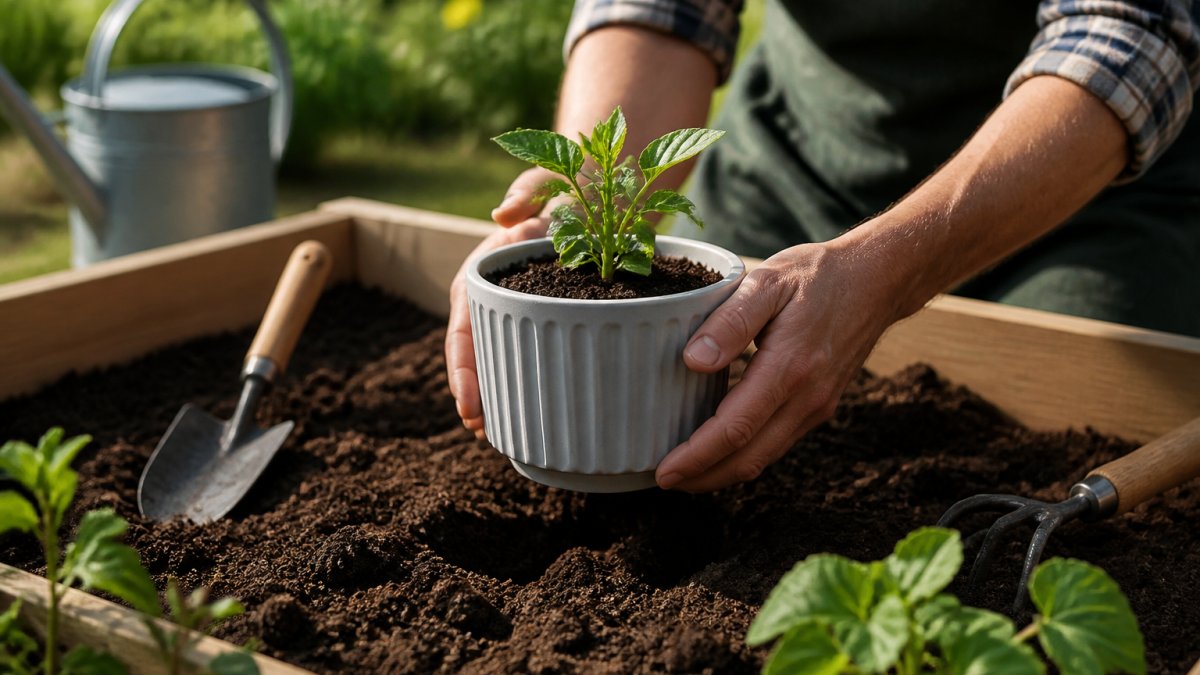
The best filament for planters is ASA when the planter faces full sun, and PETG when it sits in shade or partial shade. Planters are punishing objects: they hold wet soil, sit in sunlight, and carry load. Material choice has to answer all three.
Drainage, Soil Contact, and Moisture Exposure
Moisture is the quiet killer of printed planters. Soil stays damp for days, and any part in constant contact with wet earth faces prolonged humidity. PETG's water resistance makes it a strong performer here, and its layer adhesion reduces the risk of seams opening under soil pressure.
Sun exposure flips the answer. A planter on a patio or in an open bed takes direct UV for months. That is ASA territory. LineBoss ASA filament is designed for exactly this: sunlight, rain, and harsh climates, with the structural integrity to hold shape through temperature swings.
Wall thickness and infill matter as much as resin. Thin walls trap heat and flex under soil load. Design planters with generous walls and drainage holes that do not rely on bridging over wet soil. For starting profiles, LineBoss publishes slicer settings that give a baseline before tuning.
Filament for Hydroponics: Water, Nutrients, and Long-Term Soaks
Filament for hydroponics needs water resistance first and UV resistance second. Hydroponic parts live in constant contact with nutrient solution, often indoors or under cover, so sunlight is a secondary concern while moisture is permanent.
PETG is the natural fit. LineBoss PETG filament is water-resistant and prints with low warping and strong layer adhesion, which suits fittings, clips, and reservoir components that must stay sealed. Its impact resistance also helps parts survive handling during water changes.
Nutrient solutions add a wrinkle. Concentrated salts can leave residue on printed surfaces, and layer lines give that residue somewhere to collect. Smooth walls and higher infill reduce the surface area where deposits build. Print hydroponic parts with more perimeters than decorative prints, and rinse them before use.
For cost planning across a hydroponic build, the 3D printing cost calculator helps estimate material use before a spool order.
Pros and Cons of Each Outdoor Filament
Each LineBoss material carries real trade-offs for garden work. The table below summarizes them, and the sections that follow explain where each one earns its place.
| Filament | Pros | Cons |
|---|---|---|
| ASA | UV and weather resistance, high heat tolerance, strong mechanical properties | Needs an enclosure and ventilation, higher price |
| PETG | Water-resistant, low warping, strong layer adhesion, easier to print | Moderate UV resistance, softens in high heat |
| ABS | High heat resistance, tough and durable | Poor UV resistance, needs an enclosure, warping risk on large prints |
| PLA+ | Beginner-friendly, tough for a PLA variant, low cost | Low UV and heat resistance, unsuitable for long outdoor exposure |
LineBoss ASA Filament
ASA is the strongest outdoor performer in the lineup. LineBoss ASA filament targets UV-aware outdoor parts and higher-temperature applications, with clog-free extrusion and vacuum-sealed packaging to keep moisture out before printing. It is the pick for sun-exposed planters, stakes, and structural brackets.
The honest limitation is process difficulty. ASA wants an enclosure, controlled cooling, and ventilation. Makers coming from PLA should expect a learning curve, though LineBoss offers setup help to shorten it.
LineBoss PETG Filament
PETG is the everyday workhorse. LineBoss PETG filament combines PLA-like printing ease with ABS-like strength, plus water resistance for outdoor use. Low warping and strong layer adhesion make it forgiving on larger parts, and it handles hydroponic and shaded garden jobs well.
Where it falls short is sustained heat and sun. A dark PETG part in direct summer sun will soften and fade faster than ASA. For shaded beds and water systems, that trade-off rarely matters.
LineBoss ABS and PLA+ Filament
ABS brings high temperature resistance and toughness, but its UV resistance is weaker than ASA's. LineBoss ABS filament reduces cracking and warping on large prints and suits shaded structural parts and electrical enclosures rather than sun-facing garden pieces.

PLA+ is the indoor specialist. LineBoss PLA+ filament is tougher than standard PLA and beginner-friendly, but it has low heat and UV resistance. Use it for seed-starting trays and short-season projects that come inside before winter.
Which Outdoor Garden Filament Should You Pick?
Pick ASA for anything that faces the sun year-round, and PETG for anything that gets wet but stays shaded. That rule covers most garden builds, and the exceptions are easy to reason through.
A simple decision path:
- Full sun, load-bearing, or dark colored: ASA
- Constant moisture, shaded or indoor hydroponics: PETG
- Shaded structural parts needing heat resistance: ABS
- Seed trays and seasonal indoor projects: PLA+
Consistency between spools matters as much as material choice when a garden build spans several parts. LineBoss filament is held to a +/-0.02mm diameter tolerance and sealed with desiccant.
Frequently Asked Questions
Is PETG or ASA better for outdoor garden parts?
It depends on sun and heat exposure. ASA offers excellent UV and weather resistance and high heat tolerance, so it holds up best on parts that sit in direct sunlight or get hot. PETG is water-resistant and tougher than PLA, making it a strong, easier-to-print choice for brackets, clips, and planters in partial shade. For long-term direct-sun exposure, choose ASA; for lower-cost, low-warp printing, choose PETG.
Can PLA be used for garden parts outdoors?
Standard PLA is a poor long-term outdoor material because it softens in heat and degrades under UV. PLA+ is tougher and slightly more heat resistant than standard PLA, so it can work for short-season or shaded items like seed markers and small clips. For anything that stays outside through summer sun or winter freezes, use ASA or PETG instead of PLA+.
Which 3D printing filament is most UV resistant?
Among common filaments, ASA is the most UV resistant. Its formula resists environmental stress cracking and keeps its color and strength in sunlight, rain, and harsh climates. ABS is similar but less stable in UV. PETG resists moisture well but can chalk and fade over long sun exposure. If your garden part faces the sun year-round, ASA is the safest pick.
What filament should I use for a self-watering planter?
Use PETG or ASA for a self-watering planter. Both resist water and moisture long term. PETG is easier to print, has excellent layer adhesion, and handles the constant dampness of a reservoir. ASA adds UV and heat resistance if the planter sits in full sun. Avoid PLA+, which can soften and degrade when exposed to water and heat over time.
How do I protect 3D printed garden parts from sun and rain?
Start with the right material: ASA for direct sun and heat, PETG for wet but shaded spots. Design with thicker walls and avoid thin, unsupported sections that crack under freeze-thaw cycles. A UV-resistant clear coat can add protection to PETG parts. Drill drainage holes so water cannot pool, and bring removable parts like clips and stakes indoors during extreme weather.
Garden parts fail slowly and quietly, and the wrong filament only shows its limits after a season outdoors. Matching material to exposure is the difference between a planter that lasts and one that cracks by August. LineBoss Filament supplies ASA, PETG, ABS, and PLA+ with product-specific setup support, vacuum-sealed spools, and free shipping over $50, so a garden build can start with the right material rather than a guess. Shop the lineup and match each part to its conditions.