How to Order Custom Prints: A File-to-Finish Guide
Learn how to order custom prints without wasted spools or failed jobs. Prepare print-ready files, pick materials, and estimate total cost before checkout.
Read guideLineBoss knowledge base
Practical material comparisons, setup fundamentals, and project guidance to help you choose confidently before a long print.
Learn how to order custom prints without wasted spools or failed jobs. Prepare print-ready files, pick materials, and estimate total cost before checkout.
Read guideLayer height shapes how evenly filament extrudes, and small changes can fix rough walls. Learn how to pair it with nozzle size and calibrate flow.
Read guideCompare engineering-grade filament options like PETG, ABS, ASA and PETG-CF, then match each to heat, UV or rigidity needs. See which spool fits your part.
Read guideCompare atomic filament alternative for print farms with material specs, consistency checks and bulk buying tips. Compare specs and choose with confidence.
Read guideA food-safe coating seals PLA layer seams against food and moisture. Compare epoxy, silicone, polyurethane and shellac, and check cure and heat limits.
Read guideCustom 3D printing service vs. your own printer: a break-even example, the quote variables to check, and tips for ordering your first part.
Read guideCompare a prusa3d alternative for professional makers on build volume, engineering materials and total cost, then match the right printer to your workflow.
Read guideFilament diameter tolerance and layer adhesion decide whether functional parts hold up. Compare 5 LineBoss materials by spec, price and best use.
Read guideCompare reliable filament brands by diameter tolerance and moisture control. See how LineBoss PLA, PLA+ and PETG keep extrusion consistent.
Read guideBrittle 3D prints usually trace back to wet filament, low temps, or weak layer adhesion. Learn how to diagnose and fix each cause before your next spool.
Read guidePLA filament temperature for beginners starts with a safe baseline and a temperature tower. Learn nozzle and bed settings for clean, strong prints.
Read guideAn active filament dryer heats ABS to drive out moisture, while a dry box only slows reabsorption. Compare both for ABS and see which fits your workflow.
Read guideChoosing tpu filament for cosplay comes down to hardness, printability and paintability. Compare your options and find the right spool for armor and props.
Read guideFind the best functional parts filament when Polymaker is not the right fit. Compare PETG, PLA+, ABS, ASA, and TPU by strength, heat, and cost.
Read guideThe best filament for dishwasher safe 3D prints depends on heat resistance, so compare PETG, ABS, and ASA by wash cycle and food contact needs.
Read guideASA filament suits outdoor and high-temperature production parts. Compare properties, printer needs, and warping fixes before you commit to a material.
Read guidePick your nozzle size from the smallest filament diameter you measure, not the label. Measure ten points with calipers, then stay at 0.4 mm or size up.
Read guideFix poor layer adhesion by dialing in temperature, cooling and filament drying. Learn the causes and tune your slicer settings for stronger 3D prints.
Read guideLearn how a filament dryer prevents moisture-related stringing and inconsistent extrusion, and which features matter when choosing one for your printer.
Read guideFilament waste adds up fast in high-volume printing. Learn how to cut purge, supports, and failed prints with slicer settings and simple tracking methods.
Read guideLearn how to dry 3D printer filament with a dedicated filament dryer, including setup, material-specific settings, and how to tell when filament is dry.
Read guideLearn how a filament dryer keeps hygroscopic filament dry, what to check before buying, and how drying fits your printer setup. See the buyer's guide.
Read guideChoosing the best PETG filament for 3D printing comes down to tolerance, moisture control, and settings. Compare what matters before you buy a spool.
Read guideChoosing the best filament for 3D printed garden stakes comes down to UV, moisture, and soil. Compare ASA, PETG, ABS, and PLA+ for outdoor life.
Read guideFilament diameter tolerance controls how evenly your extruder lays down plastic. Learn to read spool specs and measure yours to pick the right tolerance.
Read guideFind the best print farm filament for consistent, high-volume output. We compare PLA, PETG, and more by cost per gram, batch consistency, and reliability.
Read guideLearn how to print flexible TPU on a Bowden printer with a repeatable starting profile, filament path checks, and symptom-based fixes for feeding
Read guideChoosing between PLA and PETG? Compare strength, heat resistance, outdoor use, and PETG printing settings to pick the right filament for your part.
Read guideCompare ASA, PETG, ABS, and PLA+ to find the best outdoor garden filament for UV resistance, rain, and heat. See which holds up in sun and soil.
Read guideLearn how to compare filament consistency with a repeatable measuring and print-test protocol. Check diameter, ovality, color, and spool variation.
Read guidePETG print settings: New to PETG? Get a printer-agnostic starter profile, calibration workflow, and fixes for stringing, bed adhesion, and moisture.
Read guideUse full-batch material, machine time and labor to build an estimate. Learn how the LineBoss calculator handles reserve, minimum production rate, margin and delivery.
Read guideA repeatable workflow for checking filament condition, temperature, retraction and travel, with primary references and a printable test log.
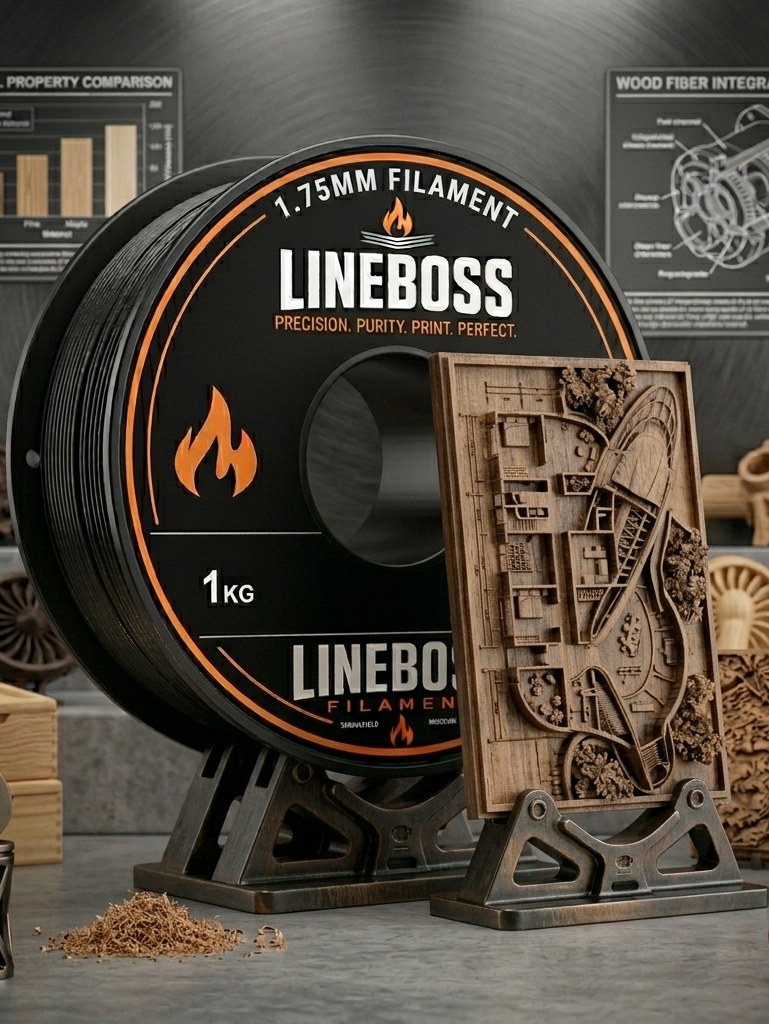
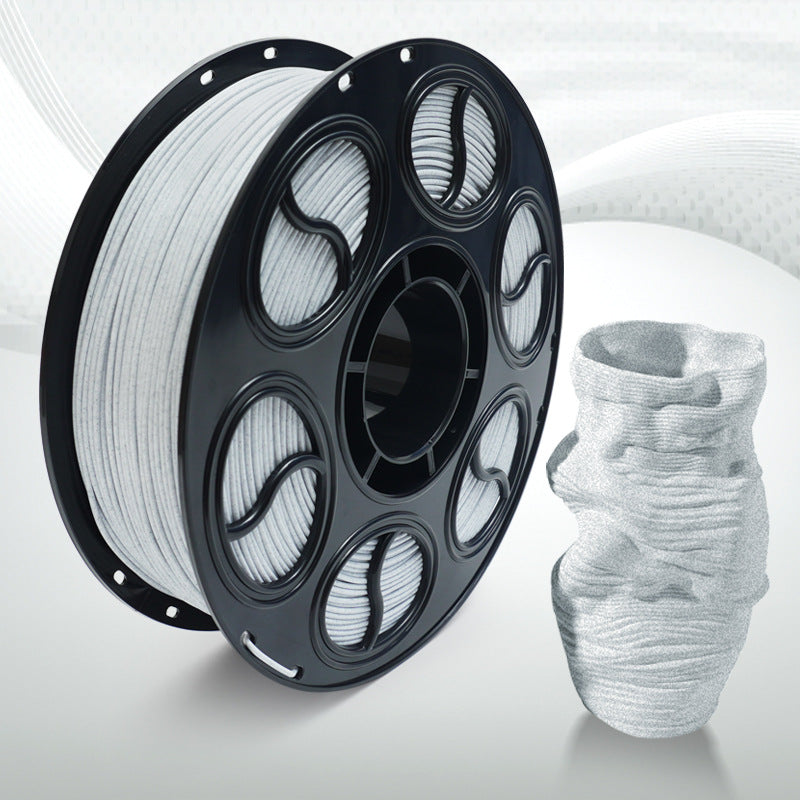
Read guideWood effect materials can bring warmth and texture. Marble blends can create a stone-like visual complexity. Metal effect filaments can create industrial visual weight without the reality of machining metal.
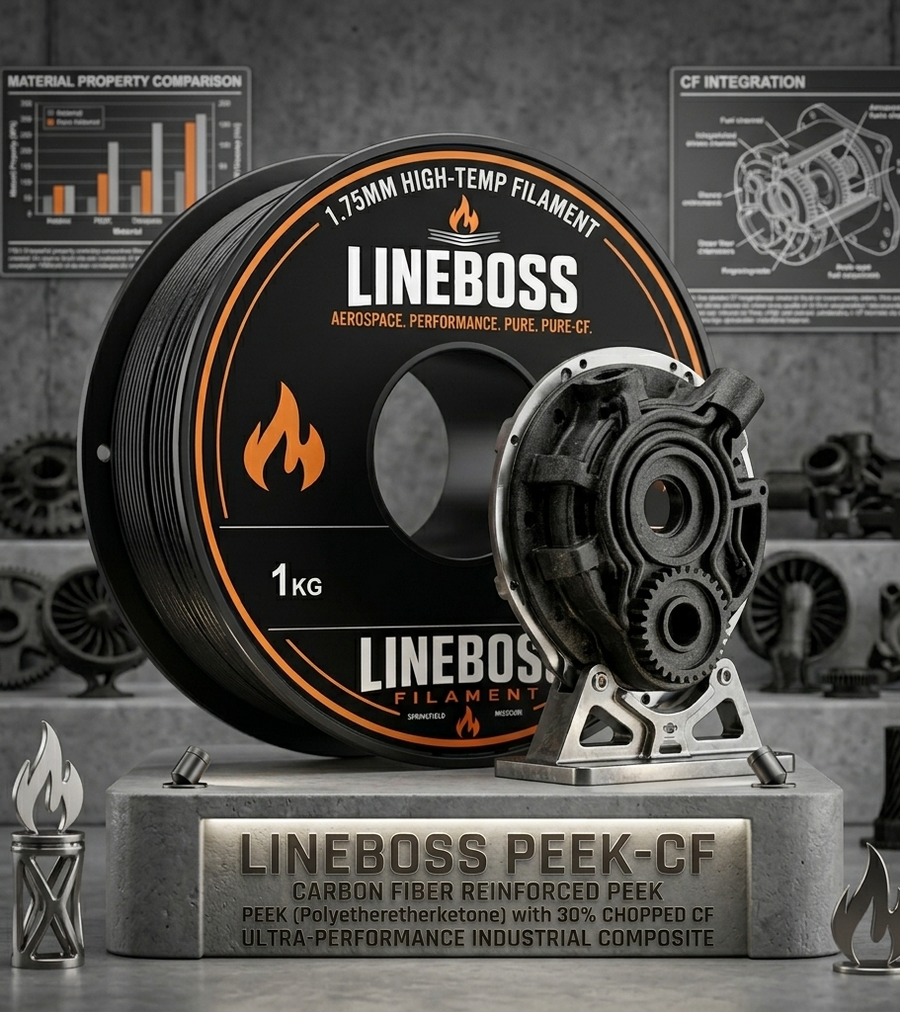
Read guideThis is high temperature, high consequence, high performance polymer territory. It is not for casual experimentation on an open-frame printer in a drafty room. It is for users chasing serious...
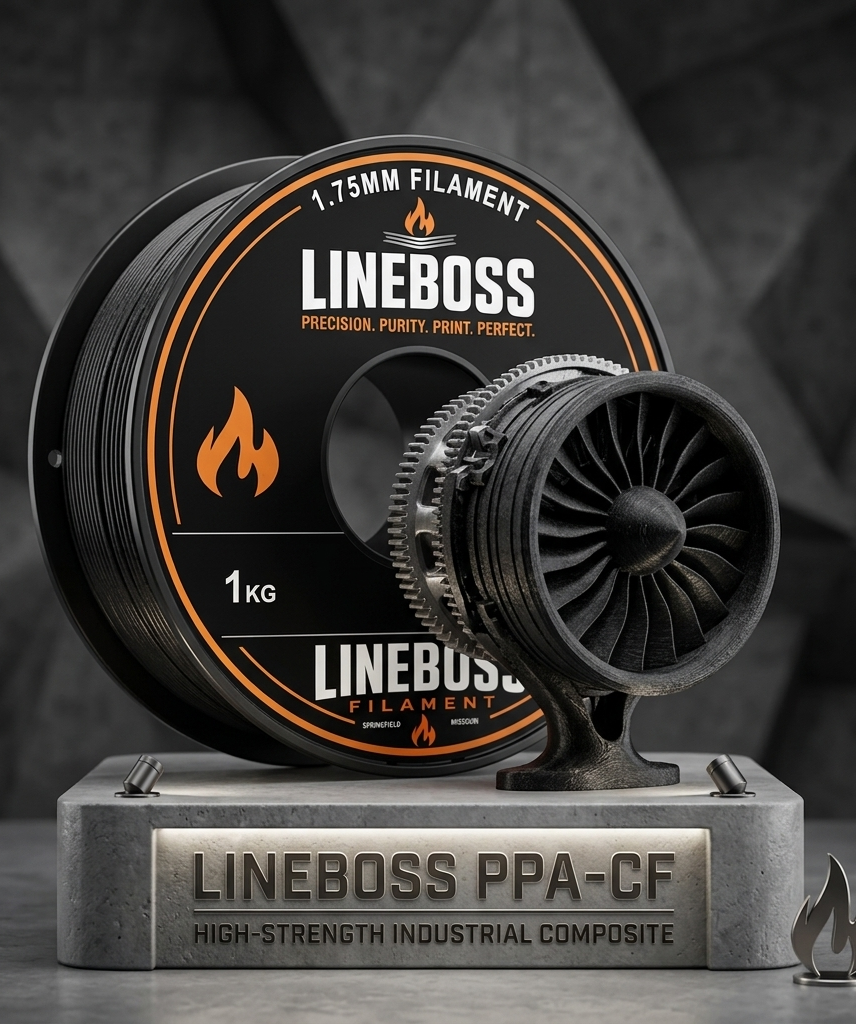
Read guideThis is the kind of filament you look at when you care about mechanical performance, thermal stability, stiffness, and serious functional intent. It is for makers, engineers, and advanced users...
Read guideCarbon fiber-reinforced ASA adds rigidity and an even more technical feel to a material already appreciated for weather resistance and better UV durability than many consumer-grade filaments.
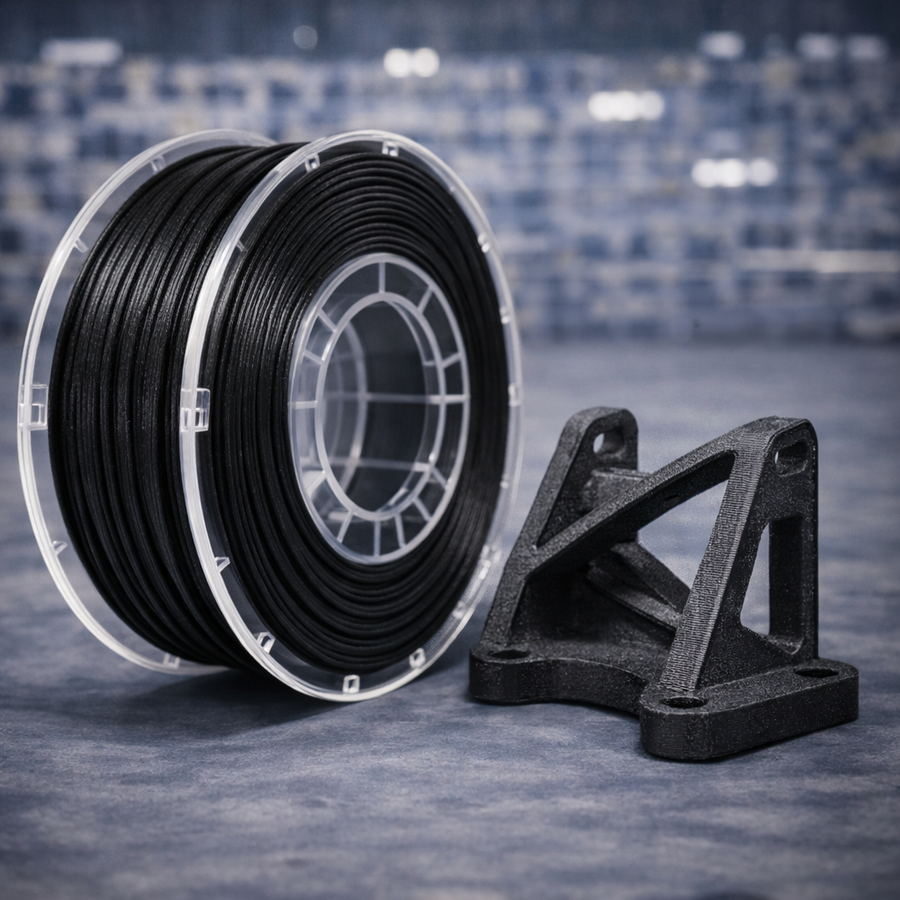
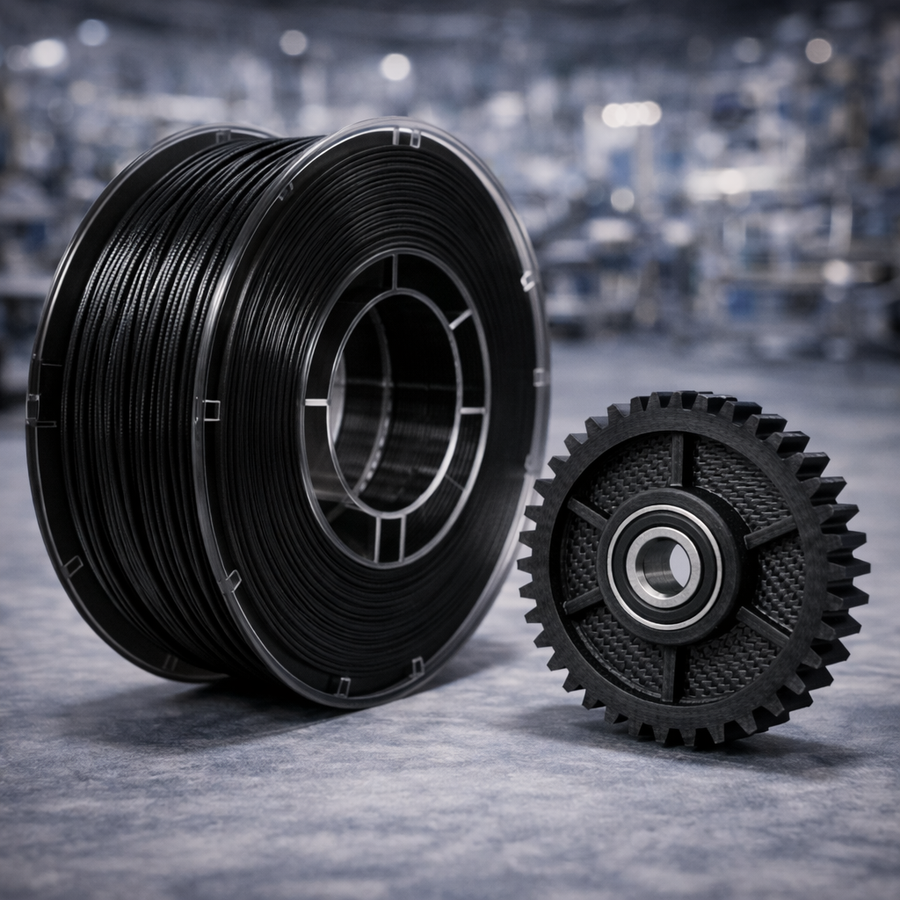
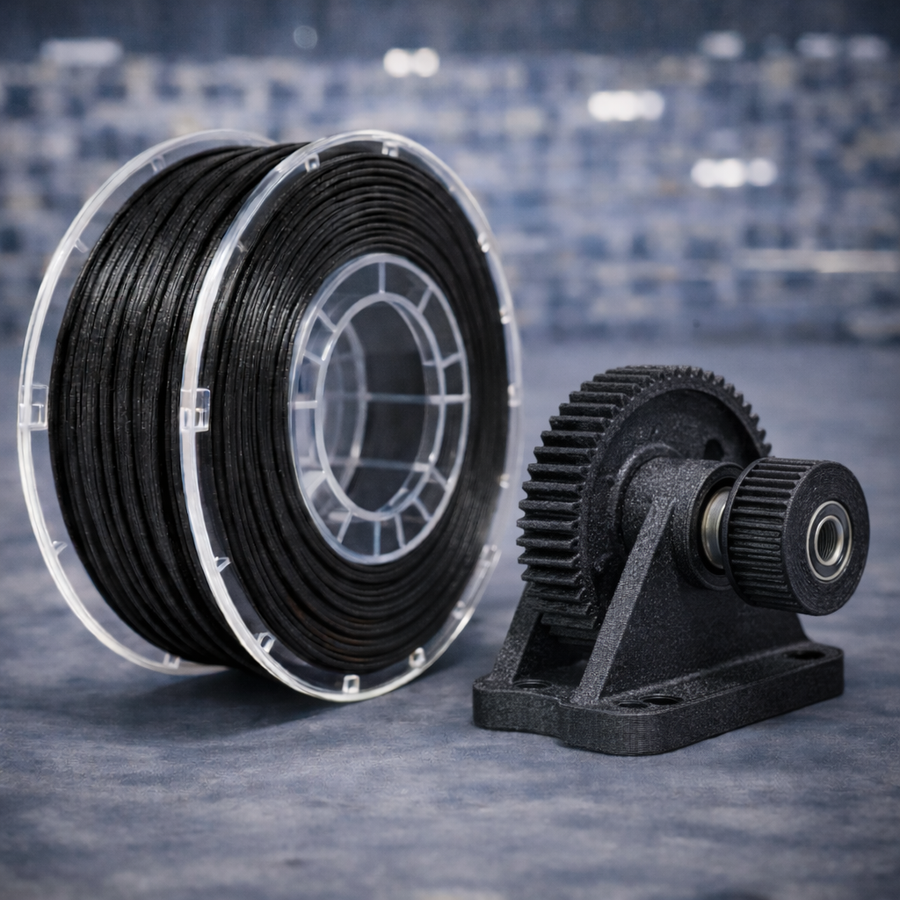
Read guidePETG CF combines some of the practical durability of PETG with the stiffness and finish advantages that carbon fiber reinforcement can bring. It is a strong option when regular PETG...
Read guideThe chopped carbon fiber content can improve stiffness, help reduce glossy plastic appearance, and often gives prints a more engineered surface texture. It is a great choice for parts that...
Read guideIf you need bend, compression, grip, damping, shock absorption, or a rubber-like response, TPU is your lane. It opens the door to tires, feet, gaskets, bumpers, protective sleeves, wearable pieces,...
Read guideIt is usually tougher than PLA, more heat-tolerant, and better suited for functional parts that see repeated handling or slightly rougher conditions. It also tends to offer good chemical resistance...
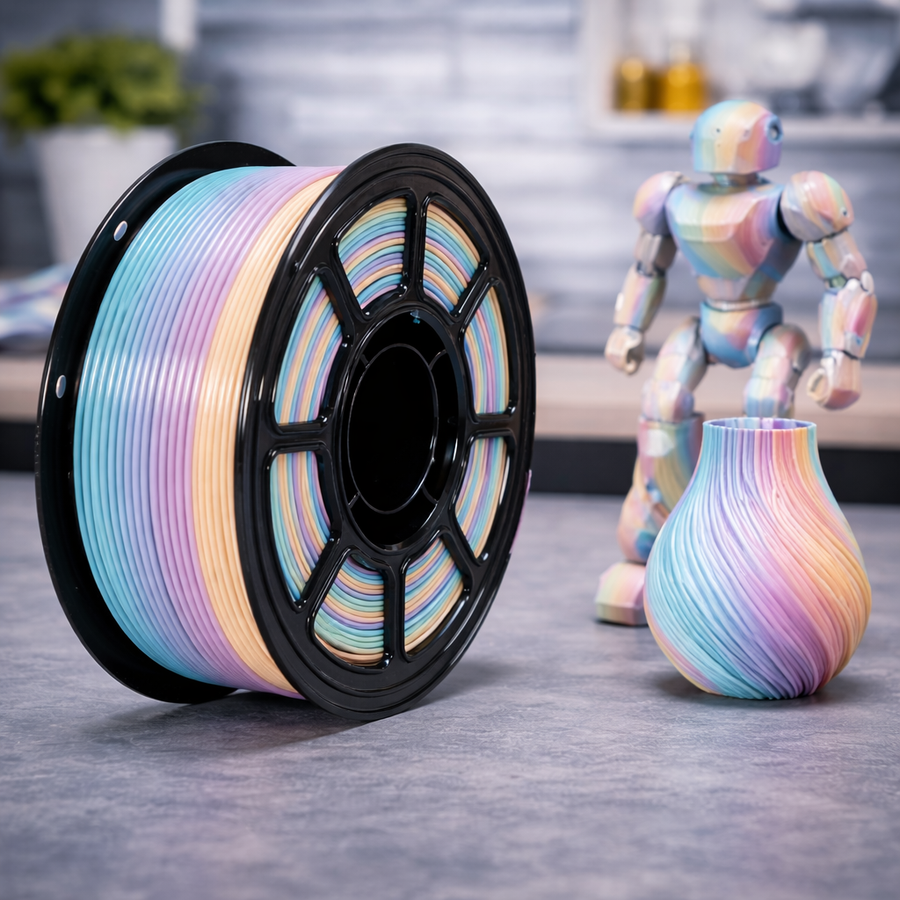
Read guideGlow in the dark, UV reactive, temperature changing, rainbow, crystal, dual color, tri color, wood-filled, marble-filled, and metal effect blends all bring unique visual or tactile experiences to the print.
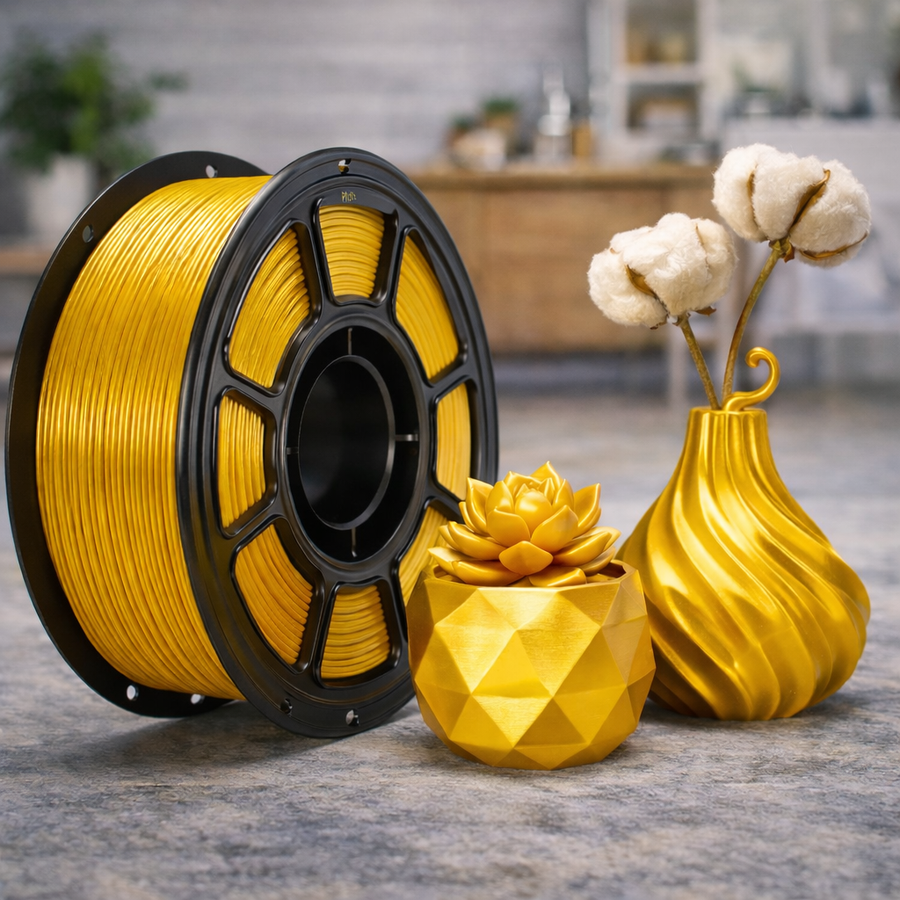
Read guideIt is made for reflective, glossy, high-pop color and premium visual energy. Golds look richer, silvers look cleaner, and multicolor silks can make even simple geometry look impressive.
Read guideInstead of the shinier plastic look some basic materials can produce, matte formulations tend to diffuse light and visually hide minor layer lines. The result is a more refined, almost...
Read guideDifferent manufacturers tune PLA+ differently, but in general, it aims to improve toughness, layer adhesion, and overall usability while keeping much of PLA’s easy going nature. For many makers, PLA+...
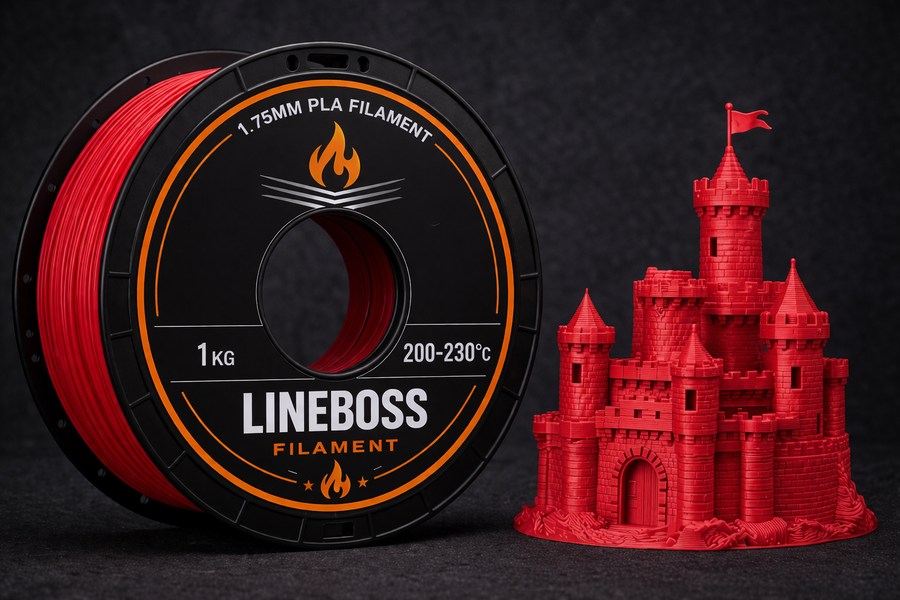
Read guidePLA is the material most people start with, and for good reason. It is approachable, dimensionally stable, usually low warp, and capable of excellent detail. It is ideal for prototypes,...
Read guideEvery material has a personality. Every blend has strengths, weaknesses, quirks, and a best use case. Some materials are built for speed. Some are built for visual impact. Some are...
Read guide